Wednesday, May 11, 2011

Inca Trail

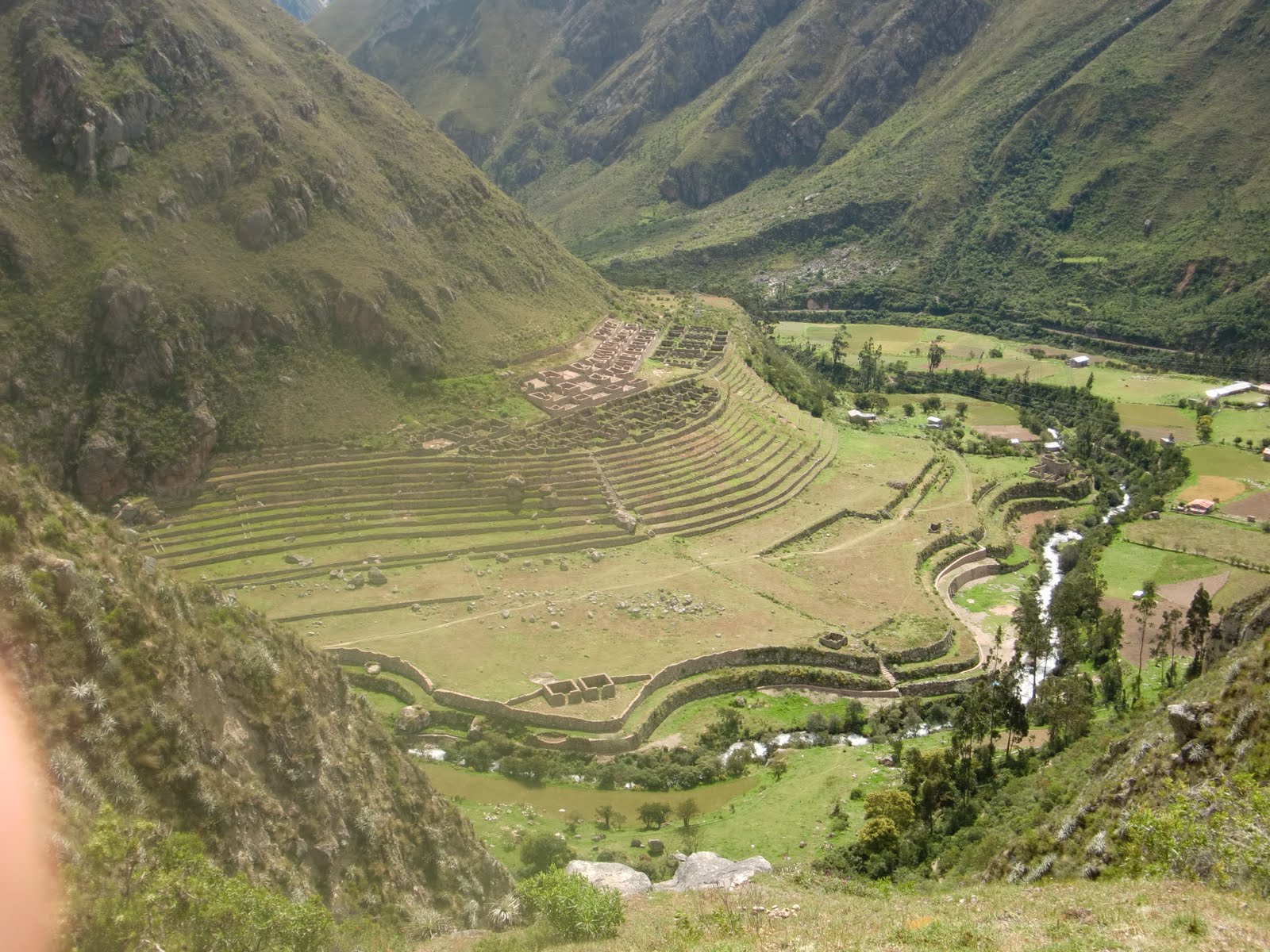
     You might find information gleaned from various brochures interesting.  Machu Pichu which means "old mountain",  is located in the District of Machupicchu, Province of  Urubamba, 72.5 miles northwest of Cusco by rail.  It is part of the Vilcabamba Batolite formation, a mass of igneous rock 250 million years old consisting most commonly of a grayish-white granite.   Chronologically, it belongs to the period of the Inka State (c.1430 A.D.).

     From the city of Cusco there are two roads or royal highways which are two thousand miles long.  One goes along the plains while the other along the mountain tops.  The Inca Trail is a system of roads setting out from different points which lead to the Inca city of Machu Pichu.  The length of this trail is 35,450m.

    This trek would be the most challenging thing I have done.  I had prepared hard for this and I was ready!  The first day was the longest in terms of distance (15 km), rolling in terms of ascent and 2570m above sea level.  Most of us experienced headache and shortness of breath.  To minimize effect of high altitude, we drank coca tea and ate coca candies.

     Our group included guides and porters who carried our baggage, tents, food and even our commode.  These men are amazing in their ability to carry their substantial loads and run along the trails undaunted by the at times sheer drop along the sides of the trail.  Most wore only sandals, running shoes or flip flops.  A common occurence was the call of "porter" requiring us to move aside allowing the porters to pass.


 At the end of each day the porters set up our tents and had basins of hot water ready for us to clean up for "afternoon tea".

  It was amazing to have a chef with us on the trail, such wonderful desserts like banana flambe.  We quickly learned the term "yappa" which means more and "sumak" which means delicious.


 The nights proved cold, but I can honestly say I slept well even though tenting is NOT my thing.

Tomorrow, Dead Woman's Pass!


Tuesday, May 10, 2011

Cusco

     Cusco was the centre of the Inca Empire and believed to be the oldest inhabited city in the Western Hemisphere. It is 3480m high in the Andes and about 39 miles from the Sacred Valley of the Incas.  This is where we would spend time acclimatizing to the altitude in preparation for our trek.

      We sampled a local purple corn drink, ate dishes including alpaca kebabs, ceviche, and lamb stew.  The food is delicious.  We took a walking tour of the city and visited  shops where we shopped and some of us who were initially reluctant,  were persuaded to purchase beautiful rugs and the like.  I am sure there are no regrets to this day!

    The next day Al (with my permission) decided to go white water rafting on the Rio Urubamba with some of the guys.  They obviously enjoyed themselves immensely.  Al's comment was "We had manly fun."  I will add he sunburned his feet pretty badly, but luckily this did not interfere with his trekking.


I on the other hand did some sightseeing and shopping ( my children and grandchildren are very thankful for this sacrifice on my part).  I found the best shopping buddies anyone could ask for.  I am proud to say we became experts in the cost of jewelry, especially necklaces!!


As you can see Cusco has many faces which are vastly different.  It is a beautiful city, one which would require far more time to explore than we had because the next day we left to start our trek to Machu Pichu ! 


Monday, May 9, 2011

Rainforest, Part 2

We later learned that our first long trek served as an assessment base for our guides to determine our stamina for the Inca Trail.  What a trial it was!  The temperature was 31 degrees celsius, it was humid, the trail was so muddy we had to wear rubber boots.  The mud was at times ankle deep, and keeping your balance and trying not to fall made it difficult to see all the sights.


 Fungi
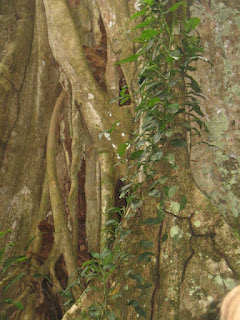


 These vines grow around trees and eventually strangle and kill the tree. 

 Luis was very knowledgeable about plant life.

 This is the inside of a tree where three people could fit inside.

 Elvis was a most friendly guide with a good sense of humor.


We all made the grade and then enjoyed a leisurely ride in the boat.


  To avoid the blistering sun which could burn your skin in minutes, we found a shady spot for lunch along the river bank.


Before I go any further, I want to share something with you that may express the beauty of what I experienced on the Amazon.  Some of you may have wondered what Al was reading while we were on the bus, the train and boats, well I want to share with you some of what he read.  This is a quote from one of Al's favorite authors, the great Harvard biologist by the name of Edward O. Wilson who wrote BIOPHILIA: The human bond with other species.


     "I savored the cathedral feeling expressed by Darwin in 1832 when he first encountered tropical forest near Rio de Janeiro ("wonder, astonishment & sublime devotion, fill & elevate the mind").  And once again I could hold still for long intervals to study a few centimeters of tree trunk or ground, finding some new organism at each shift of focus.  The intervals of total silence, often prolonged, became evidence of the intensity of the enveloping life.  Several times a day I heard what may be the most distinctive sound of the primary tropical forest: a sharp crack like a rifle shot, followed by a whoosh and a solid thump.  Somewhere a large tree, weakened by age and rot and top heavy from layers of vines, has chosen that moment to fall and end decades or centuries of life.  The process is random and continuous, a sprinkling of events through the undisturbed portion of the forest.  The broad trunk snaps or keels over to lever up the massive root system, the branches plow down through the canopies of neighboring trees at  terrifying speed, and the whole thunders to the ground in a cloud of leaves, trailing lianas, and fluttering insects.  There may be a hundred thousand trees within earshot of any place the hiker stands in the forest, so that the odds of hearing one coming down on a given day are high.  But the chance of being close enough to be struck by any part of the tree is remote, comparable to that of stepping on a poisonous snake or coming round the bend of a trail one day to meet a mother jaguar with cubs.  Still, the lifetime risk builds up cumulatively, like that in daily flights aboard single-engined airplanes, so that those who spend years in the forest count falling trees as an important source of danger."

Only those of you who shared this experience on the Amazon can relate to the excitement of seeing a jaguar track wondering if it was fresh, the frightening sound of the howling monkeys and the horror of witnessing  the guide kill a poisonous snake with a machete while wearing nothing but shorts and flip flops!

Next stop Cusco!

Saturday, May 7, 2011

Amazon Rainforest

After a good night's sleep, in spite of the jungle noises and snoring,  I awoke refreshed and ready for breakfast at 5:00 am.  I was soon to learn this would quickly become a routine.  To acclimatize to the high heat and humidity, we started off with a short 3 km trek  to the lake and a nap in the afternoon (at least I chose to nap).

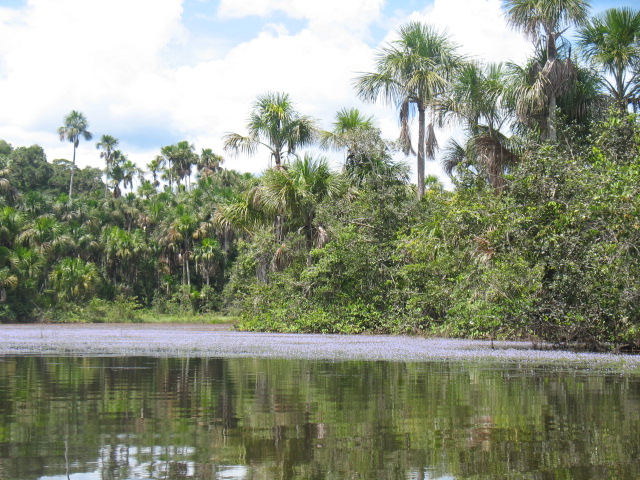
This area is rich in bird and aquatic life.  There were sightings of toucans, parrots and macaws.  Unfortunately, I was rarely able to spot anything no matter how many people assured me "you can't miss it.... it's RIGHT over THERE!!!).

 Obviously Al has a better eye!


 As you can see, we had to wear rubber boots, or "Wellington's" because of the mud.  This made trekking even more challenging!!
 Although I was dismal at spotting birds or monkeys, I could spot these leaf cutter ants. 

 Al's video will demonstrate how much foliage they can move over a long distance in a short time.  


 I was also able to capture these bats, the fact they were sleeping does not dampen my sense of accomplishment.

 The number and variety of orchids was amazing.

That evening we boarded the boats and went caiman spotting along the river.  The ability of these guides to spot these well camouflaged and at times small animals was uncanny.  In fact some of us began to joke that these animals must have been rigged ahead of time.  It was difficult for us to get good shots in the dark with our cameras.

Tomorrow will be a big day when Carlos will test our ability and determination!